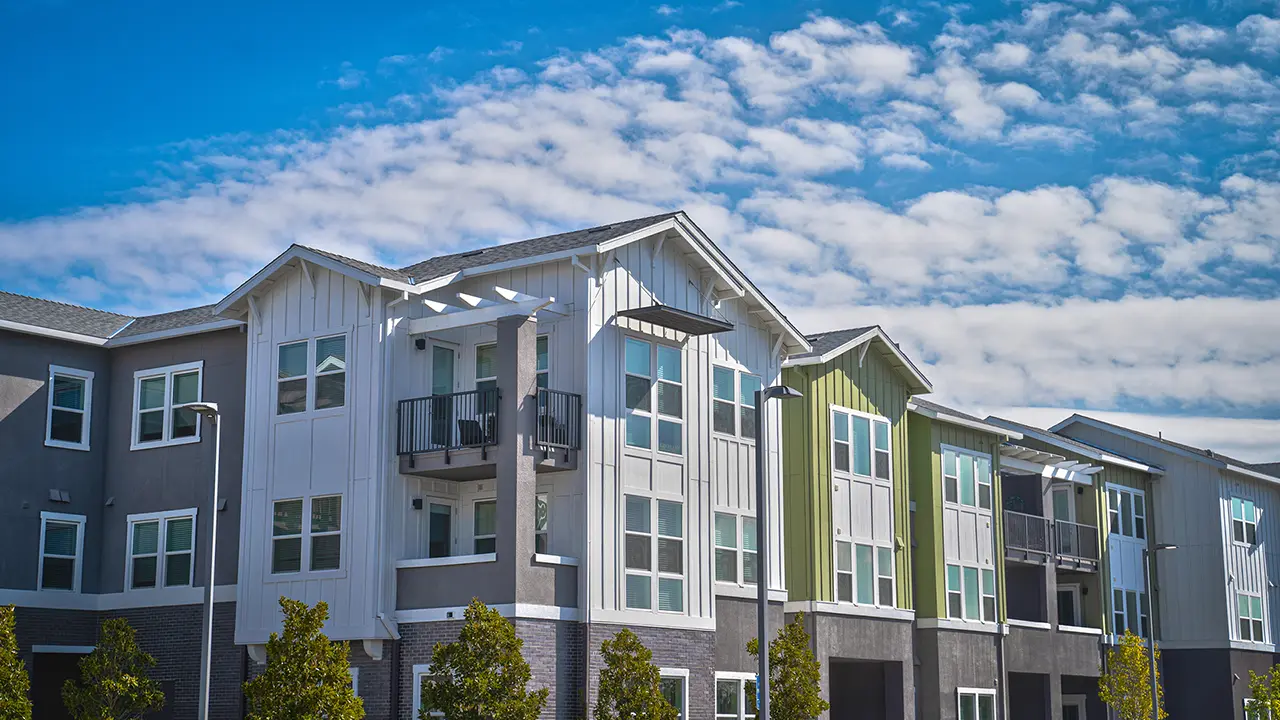
Elevate Your Portfolio with Rent Reporting
IDIQ® helps properties turn rent reporting into a credit-building benefit for residents while supporting compliance, strengthening retention, and increasing NOI.
Trusted Throughout the Multifamily Industry








Rent Reporting Services: Both a Resident Benefit and NOI Opportunity
renter households, nearly half of all U.S. renters, spend 30%+ of income on housing.
Harvard Joint Center for Housing Studies, 2024 data
of renters are more likely to choose a property that reports rent to the credit bureaus.
TransUnion, 2025
are more likely to pay on time when their rent is being reported.
TransUnion, 2025
Why Multifamily Operators Offer Rent Reporting
The best rent reporting service is one that helps your residents and your revenue at the same time. See how rental reporting lifts the entire resident lifecycle.


Stand Out At The Tour
In a competitive leasing market, a credit-building amenity sets your community apart. Most renters say they’d pick the property that reports rent over one that doesn’t.

Give Residents More Reasons to Renew
Residents building months of credit history with you can strengthen the relationship. Every renewal you keep avoids the cost of turnover.

Encourage Positive Rent Payments
When rent counts toward credit, residents treat it like every other bill they can’t afford to miss. And that supports a steadier, more predictable cash flow.

Stay Compliant
States across the country are now requiring properties to offer rent reporting to their residents. Build a compliant, yet revenue driving, rent reporting program with zero lift from your property team.
What Your Residents Receive



How Rent Reporting Works for Property Managers
We run the program; you get the upside. A turnkey service that drops into the systems you already use. Compliance and resident support never land on your team.
Enroll Residents
Choose lease-enroll opt-out or direct opt-in. We capture consent and keep the records.
We Report and Support
Positive rent payments goes to all three credit bureaus, with up to 24 months of back-reporting. All resident support is handled by IDIQ.
You Earn and Retain
Grow your NOI, strengthen resident retention, and support state compliance — all at once.

Rent reporting that plugs into your tech stack. Integrates with Yardi and other major property management and accounting platforms.

Why Property Managers Choose IDIQ for Rent Reporting
Building rent reporting in-house means owning enrollment, consent records, bureau reporting, and disputes. With IDIQ, that’s handled.
Rent Reporting FAQs for Property Managers
Rent reporting sends a resident’s positive rent payments to the major credit bureaus so they appear as a positive tradeline on the resident’s credit report. Renters can’t report their own rent, so a third-party data furnisher like IDIQ does it on the property’s behalf.
There is no single best rent reporting service for every portfolio — the right fit depends on your unit count, which states you operate in, and whether you need a compliance-driven program or a resident amenity. Property managers evaluating providers should compare five things:
Bureau coverage. State laws require an offer to at least one nationwide credit bureau. Providers differ in whether they report to one, two, or all three (Equifax, Experian, TransUnion). More coverage means more of the benefit residents expect.
Compliance workflow, not just reporting. California's AB 2747 and Maryland's rent reporting law require a documented offer, a written election, an annual re-offer, and records for residents who decline. A provider that only transmits payment data leaves the compliance work with your teams.
Property management system integration. Confirm the provider connects to your existing system rather than requiring a parallel process or manual file uploads.
Who supports the residents. Enrollment questions, reporting timing, and disputes about reported data go somewhere. If that's your on-site staff, the program adds work instead of removing it.
Positive-only versus full-file reporting. Both enacted state laws cover positive payment history only. Providers that report late or missed payments are doing something different, with different resident and legal implications.
IDIQ provides multifamily rent reporting as a managed program: residents enroll through IDIQ, payments are reported to all three major bureaus, and IDIQ handles resident support and the enrollment records that state offer requirements depend on. Property managers can request partner information to review coverage, integrations, and how responsibility is divided between IDIQ and on-site teams.
It depends entirely on how the program is set up. Run internally, rent reporting is genuinely recurring work: producing a compliant offer, collecting written elections, re-offering to every resident annually, honoring stop requests and the six-month re-enrollment wait, keeping records for residents who decline, and handling disputes about reported data. In states with an offer requirement, that work is mandatory whether or not a single resident enrolls.
Run through a managed provider, most of it moves off-site. Residents enroll with the provider rather than through leasing staff, the provider maintains the election and decline records, tracks the annual re-offer, and takes resident questions and disputes directly.
IDIQ reports positive rent payments to all three major credit bureaus — Experian, Equifax, and TransUnion — and can report up to 24 months of past positive payments to help residents build credit faster.
Rent reporting gives residents something they lose by moving. A resident building credit through positive rent payments has a tracked benefit tied to that lease — leaving means restarting it somewhere that may not offer reporting at all. That creates a reason to renew that rent concessions don't.
Rent reporting on its own does not retain residents. It works as part of a resident benefits package, and it works best when residents understand the credit impact, which depends on how the program is communicated at move-in and renewal, not just whether it exists.
Resident benefits affect NOI through four levers, and they're worth separating because they carry very different certainty.
Reduced turnover. The largest and most reliable lever. Turnover costs run into thousands of dollars per unit once vacancy loss, make-ready, and leasing costs are counted, so a small shift in renewal rate moves NOI more than most fee income. Benefits residents would lose by moving, credit building, financial wellness tools, insurance, support renewal better than one-time concessions.
Improved positive payments. Benefits tied to payment behavior, like rent reporting, give residents a direct reason to pay by the due date. Fewer late payments reduce delinquency exposure and collections work.
Ancillary revenue. Optional paid benefits can generate per-unit income, but the amount is usually modest and depends on adoption. Any pro forma built on this lever should use conservative take rates.
Leasing velocity. A differentiated benefits package can shorten days-on-market in competitive submarkets, which shows up as reduced vacancy loss rather than as revenue.
The common failure is treating adoption as automatic. A benefit residents never enroll in produces no NOI effect at all, so how the program is communicated at move-in and renewal matters as much as which benefits are offered.
Yes. IDIQ integrates with major property management and accounting platforms, including Yardi, so rent reporting fits your existing workflow without adding manual work for on-site teams.
Empower Your Residents. Grow Your NOI.
Tell us about your portfolio, or book a 20-minute walkthrough with our multi-family team. Partnering with IDIQ® comes at no cost to get started.